
- Kingdom-Styling
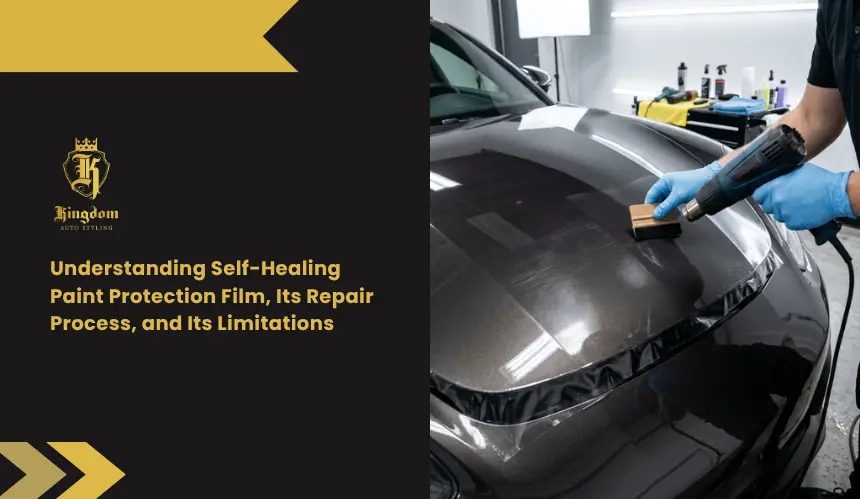
Understanding Self-Healing Paint Protection Film, Its Repair Process, and Its Limitations
Vehicle paint is exposed to light scratches, swirl marks, road debris, washing marks, and everyday surface wear over time. Even careful drivers may notice small imperfections appearing on high-contact areas, especially when the car is used regularly or washed frequently.
Modern paint protection films are designed to reduce this visible wear while helping preserve the original paint underneath. Some advanced films also include surface recovery properties that make minor marks less noticeable after heat exposure.
This blog explains what self-healing paint protection film is, how the healing process works, what types of marks it can repair, why heat matters, and what limitations vehicle owners should understand before installation.
What Is Self-Healing Paint Protection Film?
Self-healing paint protection film is a multilayer polyurethane film designed to protect automotive paint while reducing the appearance of minor surface marks. Its defining feature is a specialized top layer that can recover from light scratches when exposed to heat.
Unlike traditional protective films that only act as a barrier, self-healing PPF adds an additional layer of cosmetic recovery. This allows the surface to maintain a cleaner appearance for longer without affecting the original paint underneath.
What makes self-healing PPF different from conventional protective films
Traditional paint protection film shields the paint from debris and abrasion but does not actively recover from visible marks. Once scratches appear on standard film, they generally remain visible until the damaged section is replaced.
Self-healing PPF includes a flexible top coat engineered to respond to heat. This additional layer allows certain surface imperfections to gradually become less noticeable after exposure to warmth.
Which layers make up self-healing paint protection film
Most self-healing films consist of multiple layers working together to perform different functions. These layers commonly include an adhesive layer, a polyurethane impact layer, and a self-healing top coat.
Each layer contributes to the film’s overall durability and protective capability. While the lower layers absorb physical impact, the upper layer is responsible for the healing effect that distinguishes self-healing paint protection film from conventional alternatives.
How Does Self-Healing Paint Protection Film Work?
Self-healing paint protection film works by using heat to restore the shape of its outer layer after minor surface marks appear. Instead of repairing the paint itself, the film repairs small imperfections that develop within its top protective layer.
The healing process occurs within the film material and helps maintain a cleaner appearance over time. This technology is designed for light cosmetic damage rather than deep scratches or severe impact.
How the top layer reacts to heat
The outer layer of self-healing PPF is made from an elastic material that becomes more flexible when exposed to heat. Sunlight, warm water, or other heat sources allow the surface to relax and return closer to its original condition.
As the material responds to temperature changes, fine imperfections gradually become less visible. This process helps maintain the appearance of the film without affecting the paint underneath.
How surface marks gradually disappear
Light swirl marks and minor abrasions create small disturbances in the top layer of the film. When heat is applied, the material slowly redistributes itself and smooths out these shallow imperfections.
Because the process only affects the outer layer, the healing effect is limited to surface-level damage. Deeper cuts that penetrate further into the film generally remain visible and may require replacement.
What Types of Damage Can Self-Healing PPF Repair?
Self-healing paint protection film is designed to repair light surface imperfections, not major physical damage. The healing effect works best on shallow marks that affect the outer layer without penetrating deeply into the film.
The effectiveness of the process depends on the depth and severity of the damage. Minor cosmetic marks usually respond well, while deeper defects remain beyond the film’s self-repair capability.
- Light Swirl Marks: Fine circular marks created during washing or drying can often become less visible after heat exposure. These shallow imperfections are among the most common types of damage self-healing films are designed to address.
- Minor Surface Scratches: Small scratches caused by daily use may gradually smooth out when the top layer reacts to sunlight or warm water. The recovery process only works when the damage remains within the self-healing layer.
- Wash-Induced Marring: Repeated contact from towels, wash mitts, and routine cleaning may create light marring over time. Self-healing properties help reduce the visibility of these cosmetic defects.
- Marks From Daily Handling: Areas around door handles, trunks, and frequently touched surfaces may develop light abrasion during normal use. The film helps maintain a cleaner appearance by minimizing these minor marks.
- Very Light Surface Abrasion: Small imperfections caused by dust particles or gentle contact with soft materials may also respond to the healing process. However, more serious physical damage requires different repair methods.
Why Does Heat Activate the Self-Healing Process?
Heat activates the self-healing process because the outer layer of the film becomes more flexible when its temperature increases. This temporary flexibility allows the material to relax and return closer to its original smooth condition.
The process does not involve chemicals or moving parts. Instead, it relies on the physical properties of the film’s top layer and its ability to respond to temperature changes.
How sunlight helps trigger the healing effect
Natural sunlight is one of the most common sources of heat that activates self-healing paint protection film. As the surface temperature rises, light imperfections within the top layer gradually become less noticeable.
In many cases, everyday exposure to warm weather is enough to initiate the recovery process. This allows the film to maintain its appearance during normal vehicle use.
How warm water and external heat sources assist recovery
Warm water can also help accelerate the healing effect by temporarily softening the outer layer of the film. This is why some light marks become less visible after washing the vehicle with warm water.
Additional heat sources may also assist the recovery process when used properly. Regardless of the source, the goal remains the same: restoring the surface layer without affecting the paint underneat
What Limitations Does Self-Healing Paint Protection Film Have?
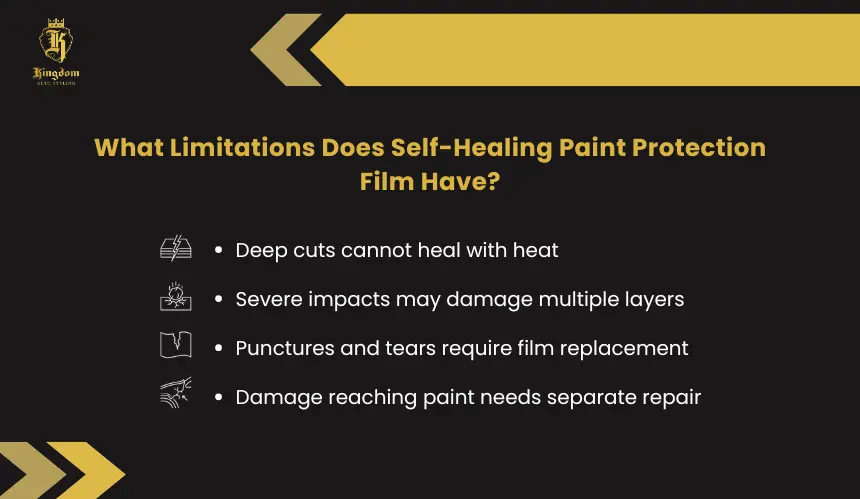
Self-healing paint protection film improves surface appearance, but it cannot repair every type of damage. The technology is designed for minor cosmetic imperfections and has clear limitations when damage becomes severe.
Understanding these limitations helps set realistic expectations and prevents confusion about what self-healing PPF is actually designed to do.
- Deep Cuts and Gouges: Damage that penetrates beyond the top layer cannot be reversed through heat. Once the film is physically cut, the affected section usually remains visible.
- Severe Rock Impacts: Large stones and high-force impacts may damage multiple layers of the film. In these situations, replacement is often necessary to restore protection.
- Punctures and Tears: Self-healing properties cannot reconnect torn material. Physical breaks in the film require panel replacement rather than surface recovery.
- Damage Reaching the Paint: If the impact passes through the film and reaches the paint underneath, the film cannot repair the underlying surface.
- Aging and Film Wear Over Time: Like any protective material, paint protection film experiences natural wear with age. As the film reaches the end of its service life, replacement may eventually become necessary to maintain performance.
Frequently Asked Questions
Can self-healing paint protection film heal overnight?
Yes, some minor surface marks may become less visible after the vehicle sits in warm conditions for several hours. The healing speed depends on the amount of heat available and the depth of the imperfection.
Does self-healing PPF work in cold climates?
Yes, self-healing paint protection film still functions in colder regions. However, because the process depends on heat, recovery may occur more slowly during lower temperatures until the surface receives sufficient warmth.
Can self-healing paint protection film be waxed or ceramic coated?
Yes, many self-healing films can be maintained with compatible waxes or protected with ceramic coatings specifically formulated for paint protection film. Product compatibility should always be verified before application.
Does every paint protection film have self-healing properties?
No, not all paint protection films include self-healing technology. Some standard films provide impact protection only and do not contain the specialized top layer responsible for surface recovery.
Can damaged sections of self-healing PPF be replaced individually?
Yes, installers can usually replace individual panels without removing the entire film package. This allows localized damage to be repaired while preserving the remaining protected areas.