
- Kingdom-Styling
Comparing Full Body PPF and Front-End PPF for Coverage, Cost, and Long-Term Paint Protection
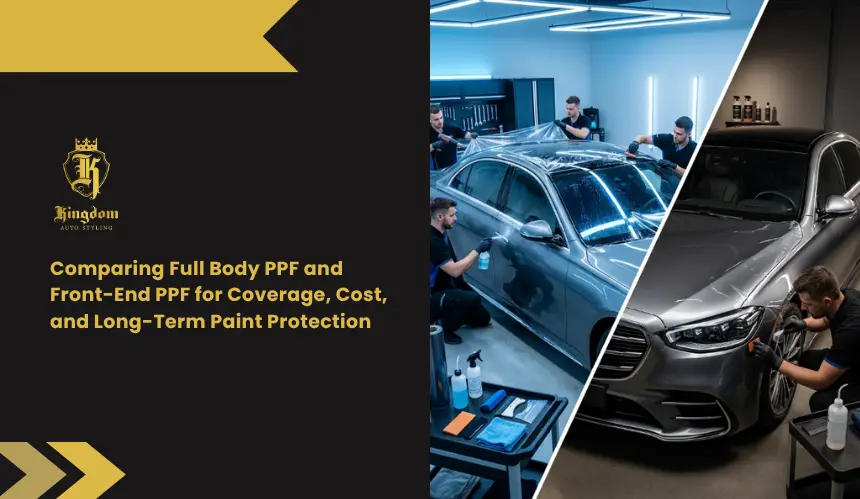
Front-end PPF is a paint protection film package that covers the most vulnerable areas of a vehicle, usually including the front bumper, hood, fenders, and side mirrors. On the other hand, full body PPF uses the same protective film technology but extends coverage across nearly all painted surfaces for more complete exterior protection.
When comparing full body PPF vs front-end PPF, the main difference is not the film quality but the amount of coverage and value each package provides. Front-end PPF focuses on high-impact driving zones, while full body PPF protects the entire painted exterior from broader daily exposure.
This blog compares both PPF packages based on coverage, road damage protection, cost-effectiveness, vehicle type, and overall value. It explains where each package performs best and helps determine which level of protection makes the most sense for a specific vehicle.
1. Which PPF Package Gives Better Coverage?
Full body PPF gives better coverage because it protects nearly the entire painted exterior, while front-end PPF only covers the most exposed impact zones. The better value depends on whether the vehicle needs targeted protection or complete surface coverage.
Front-end PPF is usually focused on areas that take the most direct road abuse during driving. Full body PPF goes further by protecting panels that may face parking lot contact, washing marks, road grime, and daily exterior exposure.
Front-end PPF gives better value for high-impact zones
Front-end PPF protects the bumper, hood, fenders, and mirrors where rock chips and road debris usually hit first. This makes it useful for drivers who mainly want protection in the areas most likely to suffer visible damage.
Because it covers fewer panels, front-end PPF gives strong targeted protection without the higher cost of full vehicle coverage. It is often the practical choice for daily drivers focused on essential paint protection.
Full body PPF gives better value for complete exterior coverage
Full body PPF covers nearly all painted panels, including doors, quarter panels, rocker panels, rear sections, and other exposed surfaces. This provides broader protection against scratches, road grime, stains, and daily wear beyond the front of the vehicle.
For owners who want the factory paint protected across the entire car, full body PPF delivers stronger long-term coverage. It is especially valuable when preserving the whole exterior matters more than reducing upfront cost.
2. Which PPF Package Handles Everyday Road Damage Better?
Front-end PPF performs better against concentrated highway damage, while full body PPF performs better against damage occurring across the entire vehicle. The answer depends on where the vehicle experiences the most exposure during daily use.
Most road debris impacts occur at the front of the vehicle, but scratches, door dings, scuffs, and contamination can affect many other painted surfaces. Because of this, each package protects different types of everyday damage.
Front-end PPF is stronger for daily commuting and highway debris
Front-end PPF is designed to absorb impacts in the areas most exposed to gravel, insects, and road debris. These sections usually experience the highest concentration of rock chips during regular driving.
For commuters and highway drivers, protecting these high-impact zones often prevents the majority of visible paint damage. This allows owners to focus protection where it matters most.
Full body PPF is stronger for full-surface exposure and parking wear
Full body PPF protects doors, side panels, rear sections, and other painted areas that remain exposed with partial coverage packages. This broader protection helps reduce damage caused by shopping carts, accidental contact, and routine exterior wear.
Because the entire painted surface is covered, full body PPF provides more consistent protection against damage that occurs beyond the front of the vehicle. This makes it useful for vehicles exposed to heavy daily use or frequent public parking.
3. Which PPF Package Is More Cost-Effective?
Front-end PPF is more cost-effective from an upfront investment perspective, while full body PPF may provide better value for owners focused on maximum paint preservation. The better financial choice depends on how long the vehicle will be kept and how much protection is actually needed.
Although both packages use the same paint protection film, the amount of material, labor, and coverage significantly affects the total installation cost. As coverage increases, so does the investment.
Front-end PPF costs less for essential protection
Front-end PPF requires less material and installation time, making it the more affordable package. Since the front bumper, hood, and mirrors receive the majority of road impacts, many owners consider this coverage sufficient for everyday driving.
For budget-conscious drivers, front-end PPF provides protection where damage is most common without paying for full vehicle coverage. This balance often delivers strong value for daily-use vehicles.
When Full body PPF is Economical
Full body PPF costs more initially because every painted panel receives protection. However, owners planning to keep their vehicles for many years may view the additional coverage as a long-term investment.
Protecting the entire factory finish can help maintain appearance consistency across all panels. This makes full body PPF attractive for owners who prioritize complete paint preservation over lower upfront cost.
4. Which PPF Package Fits Different Vehicle Types?
Front-end PPF is often better suited for practical daily drivers, while full body PPF is more common on luxury, exotic, and long-term ownership vehicles. The type of vehicle and ownership goals often influence which package delivers the better value.
Not every vehicle requires the same level of protection. Factors such as vehicle value, driving frequency, replacement plans, and paint preservation priorities all affect the decision.
Front-end PPF fits practical daily-use vehicles
Front-end PPF works well for sedans, SUVs, trucks, and commuter vehicles that experience normal road exposure. Since most visible damage occurs on the front of the vehicle, protecting these areas often provides sufficient coverage for everyday ownership.
Owners who plan to replace their vehicles after several years may prefer front-end PPF because it balances protection with cost. This approach focuses on preserving the most vulnerable sections without covering the entire exterior.
Full body PPF fits luxury, exotic, and long-term ownership vehicles
Full body PPF is commonly chosen for luxury cars, sports cars, and high-value vehicles where maintaining the original finish is a major priority. Complete coverage helps preserve appearance consistency across all painted surfaces.
Owners planning to keep their vehicles long term often view full body PPF as additional insurance against future cosmetic damage. This broader protection helps maintain the condition of vehicles where paint preservation carries greater importance.
5. Which PPF Package Gives Better Value Overall?
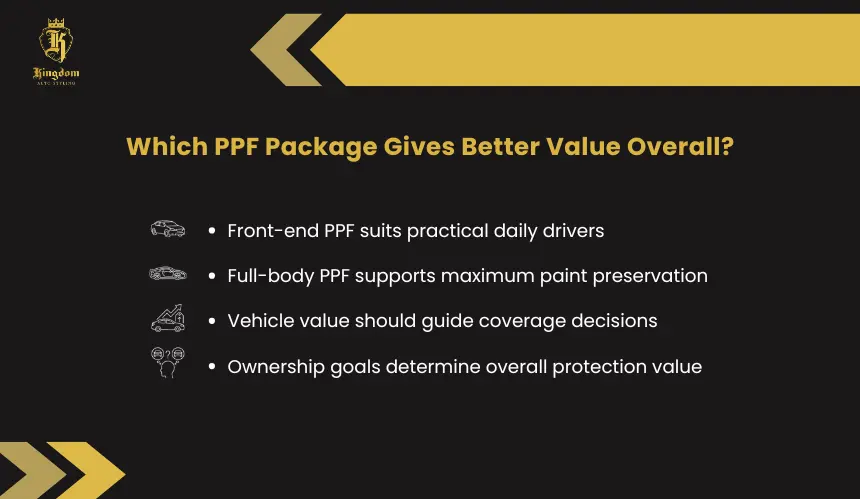
Neither package is universally better because value depends on protection goals, vehicle type, and ownership plans. Front-end PPF delivers strong value through targeted protection, while full body PPF delivers value through complete paint preservation.
The right package is usually determined by where damage is most likely to occur and how important long-term exterior condition is to the owner. Budget alone does not always determine which package provides the better return.
Front-end PPF is better when most risk comes from road impact
Front-end PPF delivers excellent value when the majority of paint damage is expected to occur on the front bumper, hood, mirrors, and fenders. Since these areas receive most highway debris, protecting them often prevents the most noticeable paint defects.
This approach allows owners to control installation costs while still protecting the sections most vulnerable to road damage. For many daily drivers, this balance provides practical long-term value.
Full body PPF is better when complete paint protection is the priority
Full body PPF becomes the stronger choice when maintaining the condition of every painted panel matters more than reducing upfront cost. Complete coverage helps protect areas that remain exposed with partial packages.
For owners focused on long-term appearance and maximum surface protection, full body PPF provides broader peace of mind. The additional investment is often justified when preserving the entire factory finish is the primary goal.
Frequently Asked Questions
Can a vehicle be upgraded from front-end PPF to full body PPF later?
Yes, additional paint protection film can usually be installed later if owners decide they want broader coverage. Many drivers start with front-end PPF and expand to full body protection as their ownership plans change.
Does full body PPF make the vehicle look different?
Modern paint protection film is designed to remain nearly invisible after installation. Depending on the product selected, owners can choose between gloss and satin finishes while preserving the original appearance of the paint.
Are all front-end PPF packages the same?
No, front-end packages vary between installers. Some include partial hood coverage, while others cover the entire hood, fenders, mirrors, and additional high-impact areas.
Can paint protection film be applied to leased vehicles?
Yes, both front-end and full body PPF can be installed on leased vehicles. Some owners use film to help protect the exterior from cosmetic damage during the lease period.
Does paint protection film require special maintenance products?
Most paint protection film products can be maintained with normal automotive washing methods. However, abrasive cleaners and harsh chemicals are generally avoided to preserve the condition of the film.