
- Kingdom-Styling
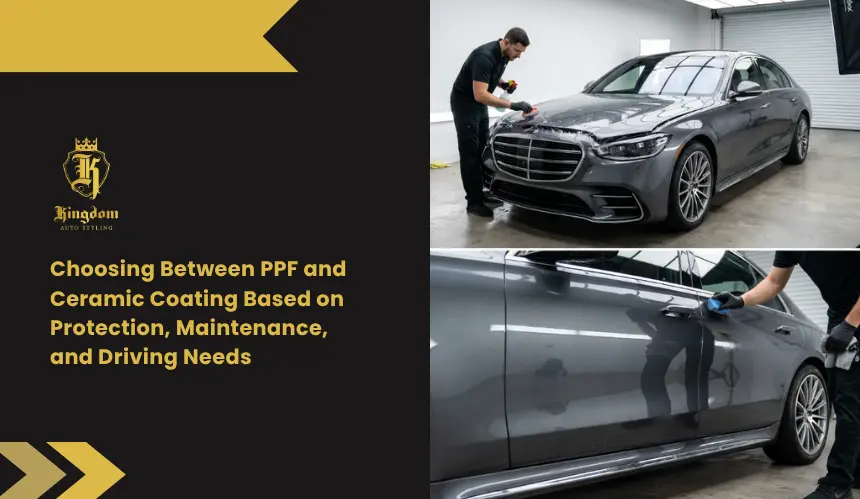
Choosing Between PPF and Ceramic Coating Based on Protection, Maintenance, and Driving Needs
Paint protection film and ceramic coating protect vehicles in different ways, which means the better choice depends on the type of damage a car is most likely to experience. When comparing PPF vs ceramic coating, many vehicle owners assume both products provide the same level of vehicle paint protection. Still, each technology is designed to address different threats affecting automotive surface protection.
Paint protection film is a physical layer installed over painted surfaces to help absorb impacts from road debris and preserve automotive paint. Ceramic coating protection, on the other hand, forms a hardened surface layer designed to improve gloss, create hydrophobic coating properties, and provide UV protection for cars exposed to daily environmental conditions.
This blog compares PPF and ceramic coating across rock chip protection, scratch resistance, exterior maintenance, paint preservation, and long-term car protection. It also explains when each treatment makes sense and when combining both provides stronger car exterior protection.
Which Solution Performs Better Against Rock Chips and Road Debris?
Paint protection film provides better protection against rock chips and road debris because it creates a physical barrier over the paint. Ceramic coating protection helps preserve the surface but is not designed to absorb impact from stones or road debris.
Both products contribute to vehicle paint protection, but they defend against different types of damage. Paint protection film is primarily designed for impact resistance, while ceramic coatings focus more on surface preservation.
How paint protection film handles physical impact
Paint protection film absorbs the impact created by gravel, road debris, and minor abrasions before they reach the paint underneath. This layer helps provide rock chip protection in high-exposure areas such as the hood, front bumper, fenders, and mirrors.
Many owners choose full or partial clear bra installation to protect the sections of the vehicle most likely to experience damage during highway driving.
How ceramic coating responds to everyday surface exposure
Ceramic coating protection creates a hardened surface that helps reduce contamination from dirt, bird droppings, and environmental fallout. However, because the coating is extremely thin, it cannot provide the same level of physical impact resistance as paint protection film.
For this reason, ceramic coating alone does not replace the rock chip protection offered by self-healing PPF and other automotive surface protection systems designed for impact defense.
Which Technology Offers Better Scratch Resistance?
PPF offers stronger protection against light physical marks, while ceramic coating helps reduce fine surface-level scratching during regular cleaning. Both can support scratch resistance, but they do not work the same way.
Paint protection film is better for areas exposed to physical contact, while ceramic coating is more useful for reducing minor wash-related marks and keeping the surface easier to clean.
How self-healing PPF helps reduce minor surface marks
Self-healing PPF can reduce the appearance of light swirl marks and fine scratches when exposed to heat. This makes it useful for high-contact areas such as door edges, rocker panels, bumpers, and mirror caps.
Because the film is thicker than a coating, it provides a stronger protective layer between the paint and everyday surface abrasion.
How ceramic coating provides scratch resistance coating benefits
Ceramic coating works as a scratch-resistant coating by adding a harder surface layer over the paint. It may help reduce minor wash marks, but it cannot prevent deeper scratches caused by sharp objects, impact, or heavy abrasion.
Its main strength is improving surface slickness, which reduces friction during washing and helps lower the chance of light cleaning-related marks.
Which Treatment Makes Car Maintenance Easier?
Ceramic coating usually makes routine maintenance easier because it creates a slick, water-repellent surface that helps reduce dirt buildup. Paint protection film also supports easier cleaning by protecting the paint underneath, but ceramic coating protection is stronger for hydrophobic performance and surface slickness.
Both treatments improve car exterior protection in different ways during regular washing. Ceramic coating helps contaminants release more easily, while paint protection film keeps road grime, bug residue, and light debris from directly touching the original paint.
How hydrophobic coating helps repel dirt and water
A hydrophobic coating helps water, mud, and loose contaminants slide off the surface more easily during rinsing or washing. This reduces how strongly dirt bonds to the exterior and helps the vehicle stay cleaner between regular maintenance washes.
Ceramic coating also makes drying easier because water beads and sheets away faster from treated surfaces. This can help reduce water spots and support a cleaner finish with less effort during routine car care.
How paint protection film affects routine washing
Paint protection film makes washing safer by creating a protective layer between the paint and exterior contaminants. Dirt, bug splatter, and light road debris sit on the film surface instead of directly affecting the factory paint.
PPF still needs proper washing because contaminants can remain on the film if ignored for long periods. However, when maintained correctly, it supports automotive surface protection while making routine cleaning less risky for the paint underneath.
Which Approach Delivers Better Long-Term Paint Preservation?
Paint protection film provides stronger long-term defense against physical damage, while ceramic coating focuses on preserving appearance and surface quality. Both contribute to automotive paint preservation, but they protect against different forms of wear over time.
Long-term car protection depends on what type of damage the vehicle experiences most often. Road debris and impact damage favor paint protection film, while environmental exposure and fading are areas where ceramic coating protection provides additional benefits.
How paint protection film supports automotive paint preservation
Paint protection film creates a durable barrier that helps shield painted surfaces from chips, abrasions, and daily wear. This protection helps preserve the original finish and reduces the likelihood of paint damage in high-impact areas.
Many vehicle owners use paint protection film on front-end surfaces because these sections receive the most exposure during regular driving. Self-healing PPF also helps maintain a cleaner appearance by minimizing the visibility of light surface marks.
How ceramic coating provides UV protection for cars
Ceramic coating helps protect paint from oxidation, fading, and environmental contamination caused by long-term exposure to sunlight. This additional UV protection for cars helps preserve gloss and maintain color consistency over time.
Because ceramic coating creates a protective surface layer, it also supports automotive paint preservation by reducing contamination that can gradually damage the finish. However, it does not replace the physical protection offered by paint protection film.
Which Choice Makes the Most Sense for Your Vehicle?
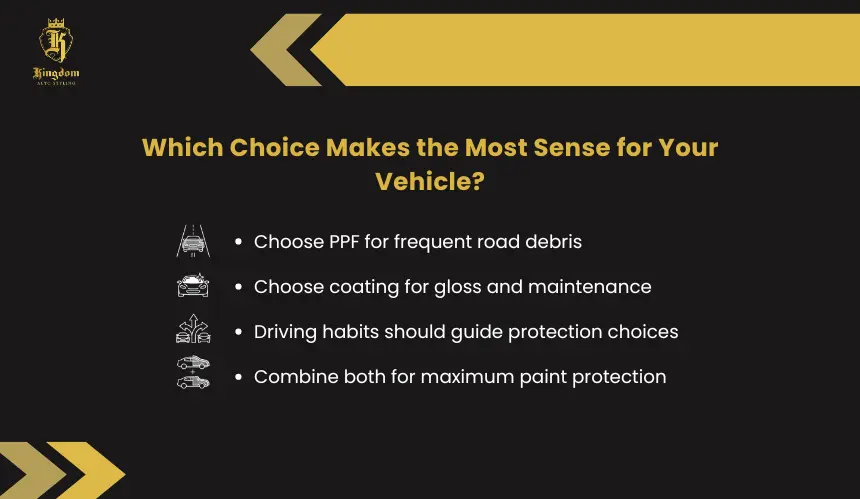
The right choice depends on how the vehicle is used and what type of protection matters most to the owner. Some drivers need maximum impact resistance, while others prioritize easier maintenance and appearance preservation.
In many situations, neither product is universally better. The decision between PPF vs ceramic coating should be based on driving habits, paint condition, budget, and long-term car protection goals.
When paint protection film is the better fit
Paint protection film is usually the better choice for vehicles exposed to highway driving, gravel roads, and frequent road debris. It provides superior rock chip protection and helps prevent physical damage before it reaches the paint.
Many owners choose partial or full clear bra installation for high-impact areas such as the hood, bumper, fenders, and mirrors. Paint correction services are often performed before installation to ensure the film is applied over a flawless surface.
When ceramic coating protection is enough
Ceramic coating protection is often sufficient for drivers who want easier maintenance, stronger gloss, and improved resistance to environmental contamination. It works well for vehicles that experience normal daily driving without constant exposure to road debris.
The hydrophobic coating properties also help simplify washing and support long-term car exterior protection with less cleaning effort.
When combining both provides maximum long-term car protection
Some vehicle owners combine paint protection film and ceramic coating to benefit from both technologies simultaneously. The film protects against physical impact, while the coating improves gloss, water repellency, and overall automotive surface protection.
This approach is often used on high-value vehicles where preserving appearance and maximizing long-term car protection are both priorities.
Frequently Asked Questions
Can paint protection film be removed without damaging the original paint?
Yes, professionally installed paint protection film can usually be removed without damaging factory paint when the paint surface is in good condition. Proper removal techniques help preserve the finish underneath and prevent adhesive residue problems.
Does ceramic coating eliminate the need to wash a vehicle?
No, ceramic coating does not make a vehicle maintenance-free. Although ceramic coating protection helps repel dirt and contaminants, regular washing is still necessary to maintain gloss and protect the surface over time.
Can paint protection film turn yellow as it ages?
Older film materials sometimes developed discoloration over time, but many modern paint protection film products are designed with improved UV resistance to help reduce yellowing and maintain clarity for longer periods.
Can ceramic coating be applied to wheels and glass surfaces?
Yes, ceramic coating can be applied to wheels, glass, trim pieces, and other exterior surfaces. Different coating formulations are often used depending on the material being protected.
Is paint correction necessary before applying PPF or ceramic coating?
Paint correction services are often recommended when swirl marks, oxidation, or surface defects are already present. Applying protection over damaged paint may lock those imperfections beneath the treatment.
Can paint protection film and ceramic coating be installed on older vehicles?
Yes, both treatments can be applied to older vehicles if the paint is still structurally sound. Many owners perform paint correction services first to improve the appearance before adding long-term protection.